 Image 1 of 5
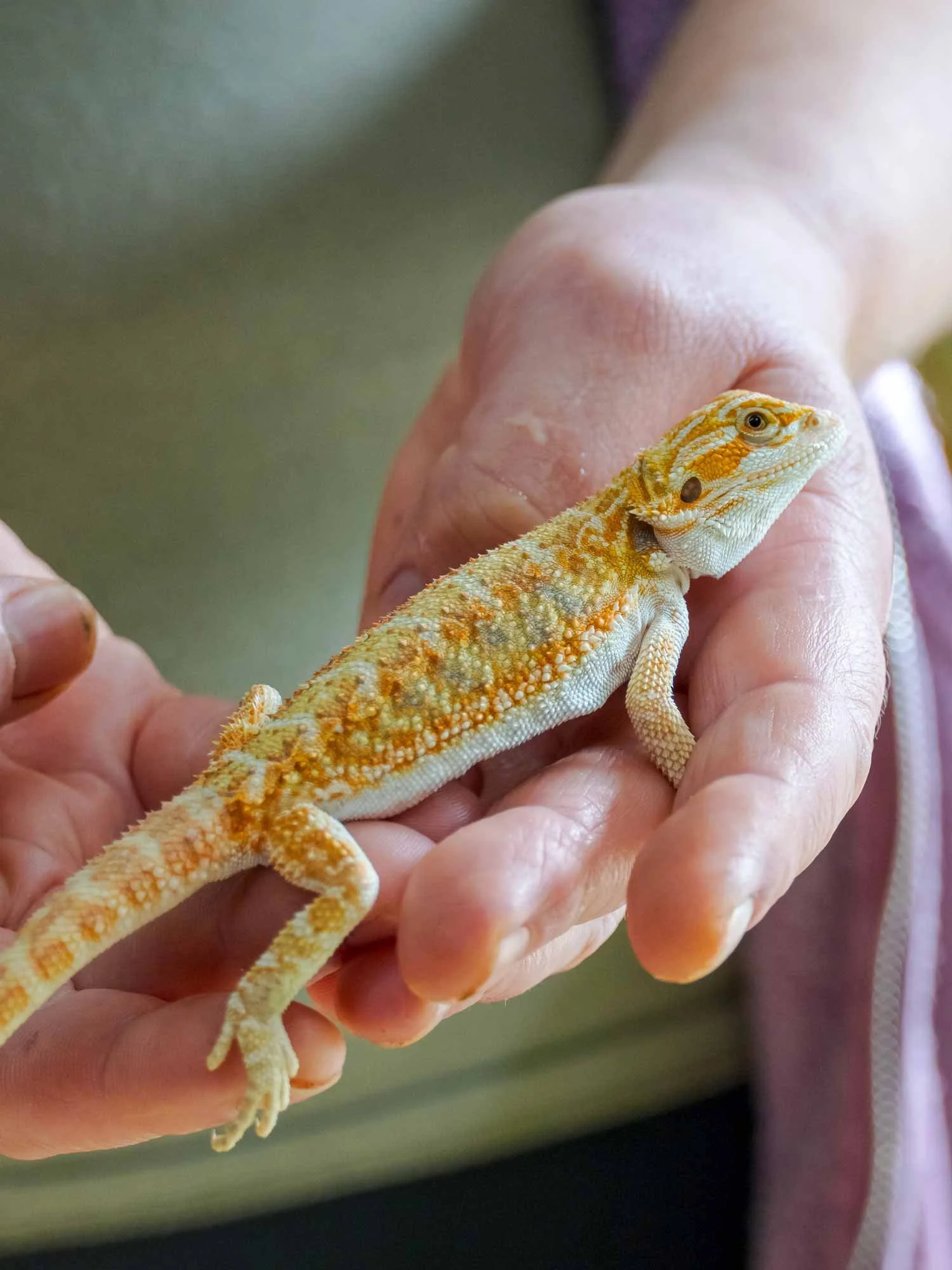 Image 2 of 5
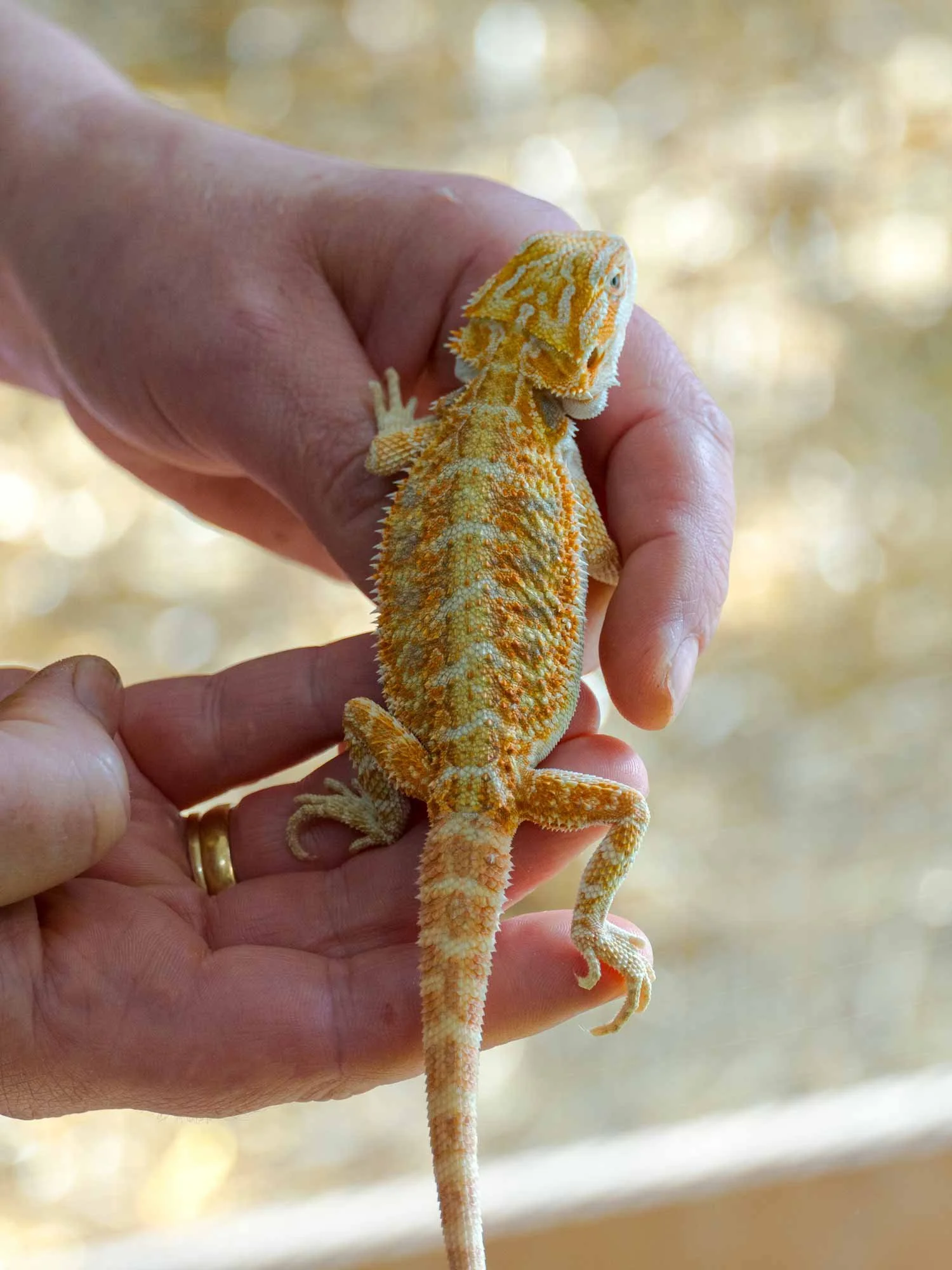 Image 3 of 5
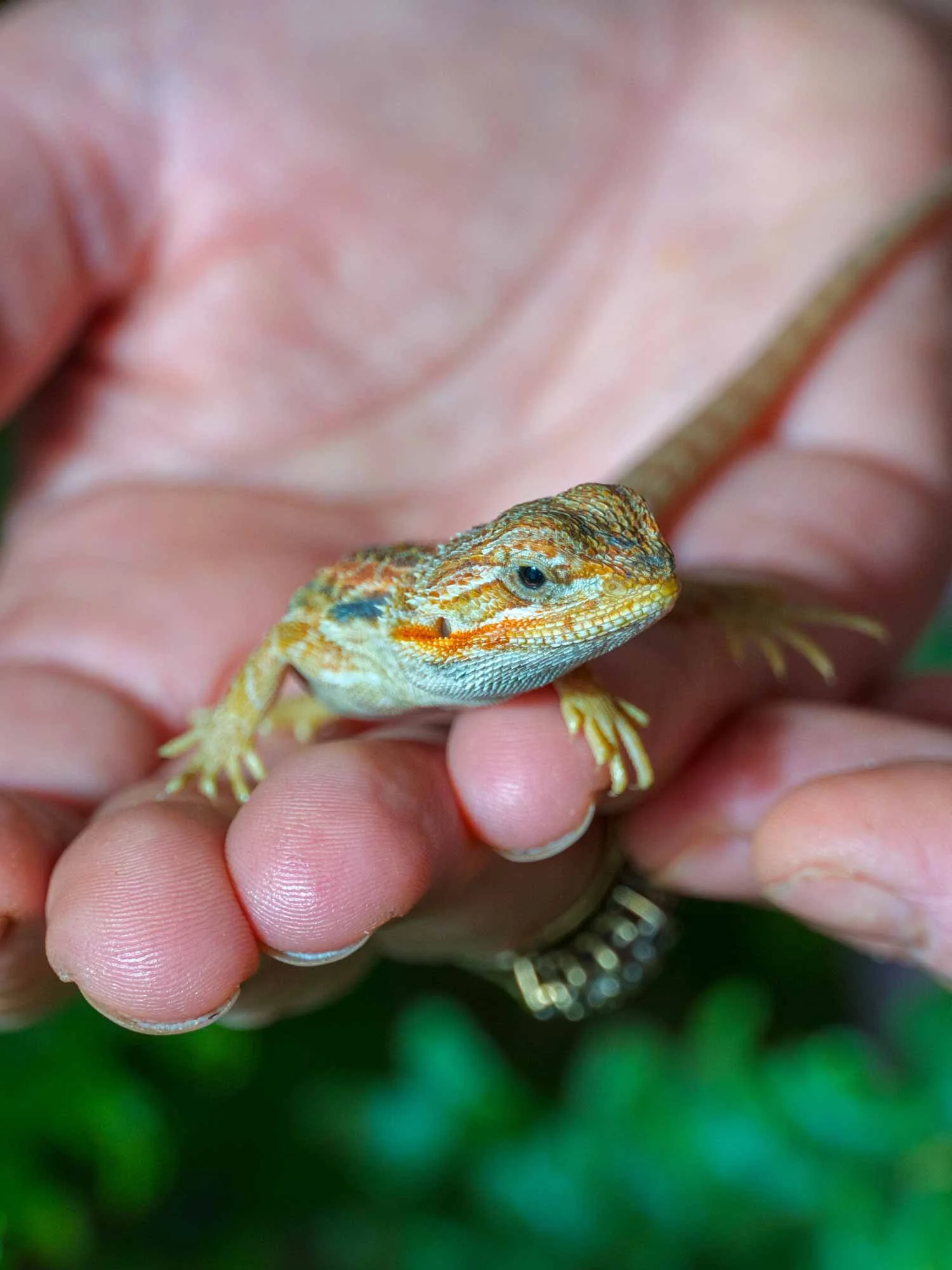 Image 4 of 5
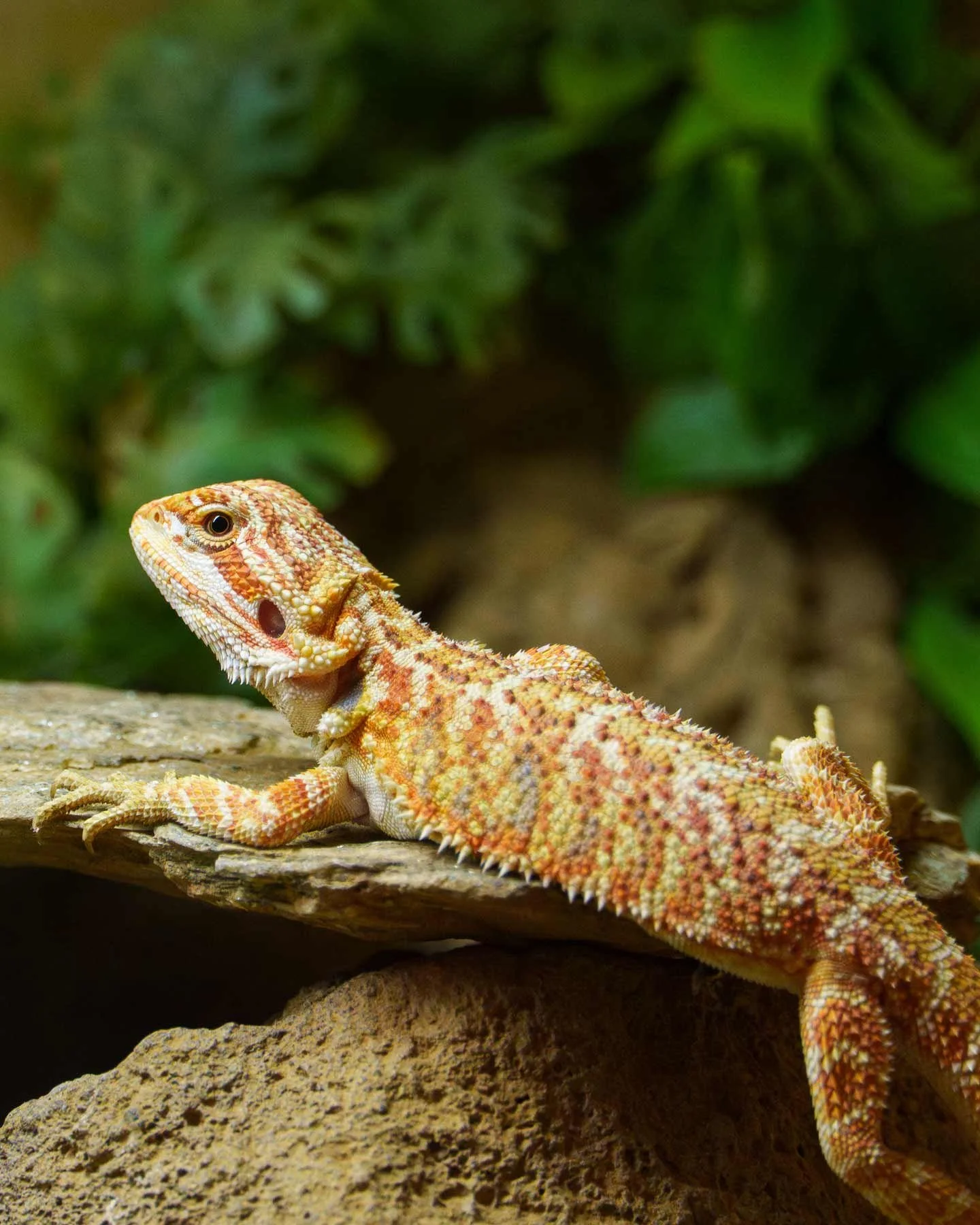 Image 5 of 5
Our animal sales policy
The welfare of our animals always comes first and we reserve the right to refuse a sale of any animal if we cannot be certain it is going to a home where it’s care requirements will be met.
–Buying your setup from us?
No problem – we'll make sure you have everything you need to get started.
–Already have your own setup?
We'll need to see photo proof that it's suitable and correctly prepared (temperatures, equipment) before we sell any animal.
This is to ensure every animal goes to a safe, suitable home where its needs can be properly met.
Our care guide
About the species
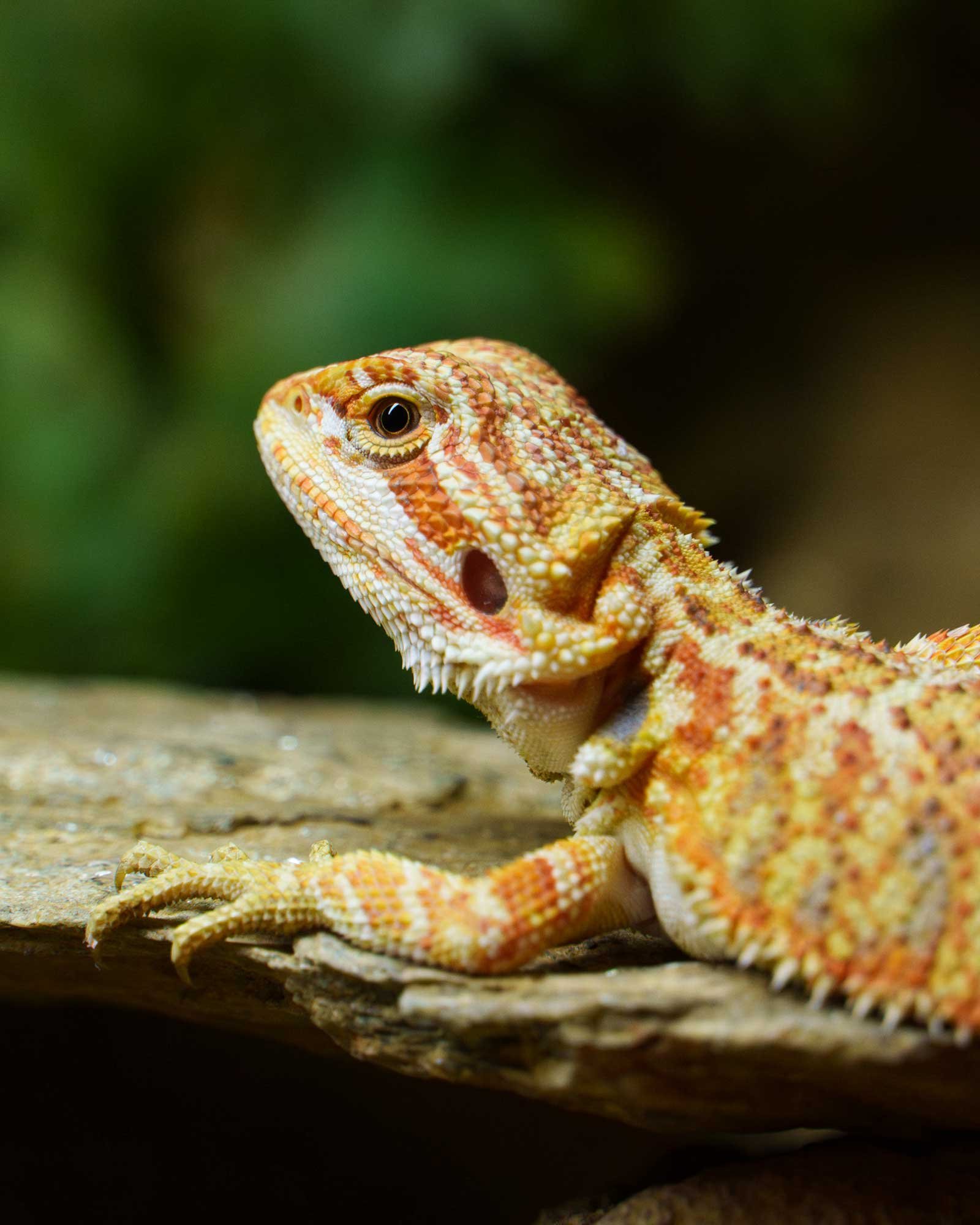
Bearded Dragons are native to the dry, hot deserts of Australia where they bask in the sun all day.
They are one of the best reptiles to keep in captivity due to their friendly, laid back and curious nature, making them great for families, children and beginner reptile keepers.
Equipment
- 4’ wooden vivarium minimum size
- Ceramic light fitting
- Basking bulb
- UVB bulb (full length of viv)
- High temperature dimming thermostat
- Digital thermometer
- UV starter controller
Housing
We recommend a minimum of a 4’ vivarium to obtain a correct heat gradient of hot and cold, alongside a high temp basking area.
Beardies will spend most their time basking, so need lots of rocks/slate to sit on.
The main basking spot should have a large piece of rock, this will be where the highest temperature is (41°C), and where the thermostat probe and thermometer will be placed.
Temperatures
Important to have a 12 hour day and night cycle. We do 8am-8pm, if you change from this adjust
gradually overtime so the animal can adapt.
Day temperature: Hottest area is basking area at 41-43°C (106-110°F). Thermostat probe and thermometer measures here.
Night Temperature: Drop to room temperature.
This is fine even in winter and is crucial to allow them to digest food properly.
UVB light
All daytime animals require UVB lighting, especially bearded dragons as they bask.
UVB light will be on for 12 hours a day as well.
Needs to be high strength ideally 12% or Zone 3.
You should replace the bulb (depending on brand ) normally every 9-12 months. After this time it will not give the correct UV, despite looking like it is working normally.
The bulb should cover the full length of viv, and be placed halfway down the back wall of viv to achieve maximum amount of exposure to animal - If its on the ceiling of viv this is not optimal.
Substrate & decoration
Coming from a dry, soily desert it is important that there is hardly any humidity, so correct substrate must be used, with no sand in, as this can be harmful if eaten.
Substrate of choice is Beardie Life, a soil, loam, and peat mix similar to their natural habitat.
This allows them to dig and holds heat, but does not hold humidity.
Lots of branches, wood logs, and cork bark are great to sit on and rub against. Rock and slate are good for basking areas.
Can use artificial plants, or reptile safe live plants and create a bio-active setup. Ask us if you’re wondering which live plants are suitable to use!
Water
No water bowl, or a very small one.
Beardies will get most of their water from the greens you feed them. This is due to keeping humidity low, and is reflective of how they get water in their natural environment.
A fortnightly warm bath outside of their enclosure is recommended also.
Food and diet
Greens should be offered daily, these can consist of: water cress, rocket, baby leaf salad, romaine lettuce, little gem lettuce and weeds such as dandelions. Be sure to wash them all first!
Live food is the bulk of any diet, for both babies and adults.
Locusts normally favoured as don't bite and hide less, as well as a good protein ratio. Also can try crickets, cockroaches, morio worms, waxworms (only treats).
Size of live food needs to be in relation to the age of the beardie, ask us for more on this!
Supplements
All beardies in captivity need extra calcium and vitamins, as a powder supplement, dusted on greens or live food.
5 days a week: Pure calcium supplement - Calcidust
Twice a week: Vitamin supplement - Nutrabol
Cleaning
Spot clean: Daily. Take out any uneaten greens and live food as well as animal waste.
Full clean: Every 4 weeks take out all substrate and clean viv with a reptile safe disinfectant.
Handling
Leave alone for a week to settle into new environment, its a big change for them!
Once settled and they are eating and acting normally, you can gently handle for a few minutes a day.
Slowly build this up over time, but only to how long your beardie is happy out of their enclosure. You will know when they’ve had enough as they will go cold and be looking to get back to the heat.
As with any animal ensure you wash your hands properly after handling.
Shedding
All beardies shed their skin. As babies this is more frequent and can seem almost constant.
They shed in bits and pieces not all in one piece, and may be more grumpy during shed.
Be sure to give them lots of things to rub against to help get skin off, and DO NOT pull the skin off in any way as this can damage the skin underneath.
Need help getting started?
At The World Of Fish And Pets, we're always happy to help you prepare for your new pets.
Whether you need advice on choosing the right equipment, setting up an enclosure, or understanding your animals care requirements, we are here to help.
Come and visit us in Sheldon, Birmingham, or get in touch.
Contact us:
0121 603 4325
enquiries@theworldoffishandpets.co.uk
Instagram: @The World Of Fish And Pets