 Image 1 of 3
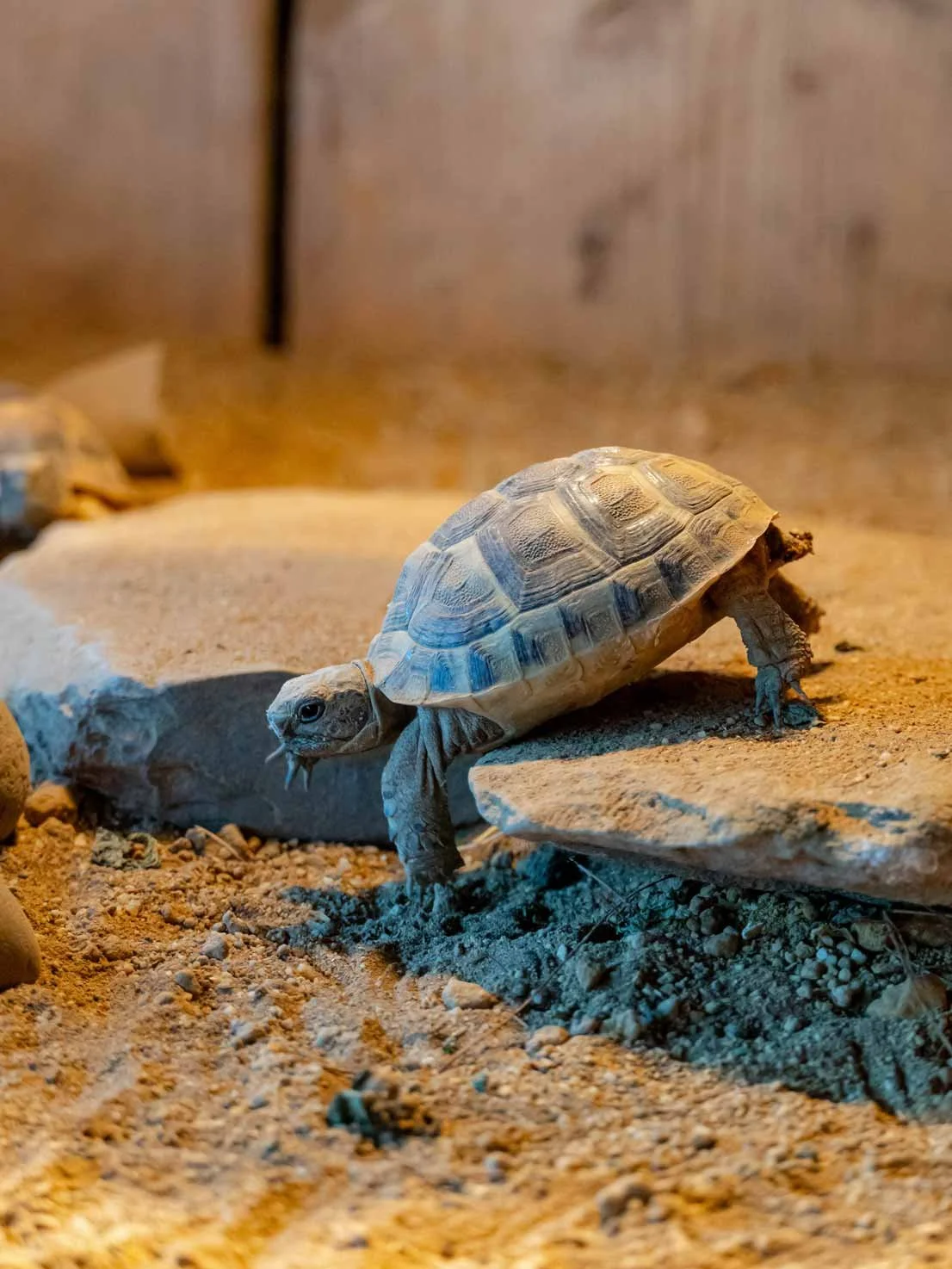 Image 2 of 3
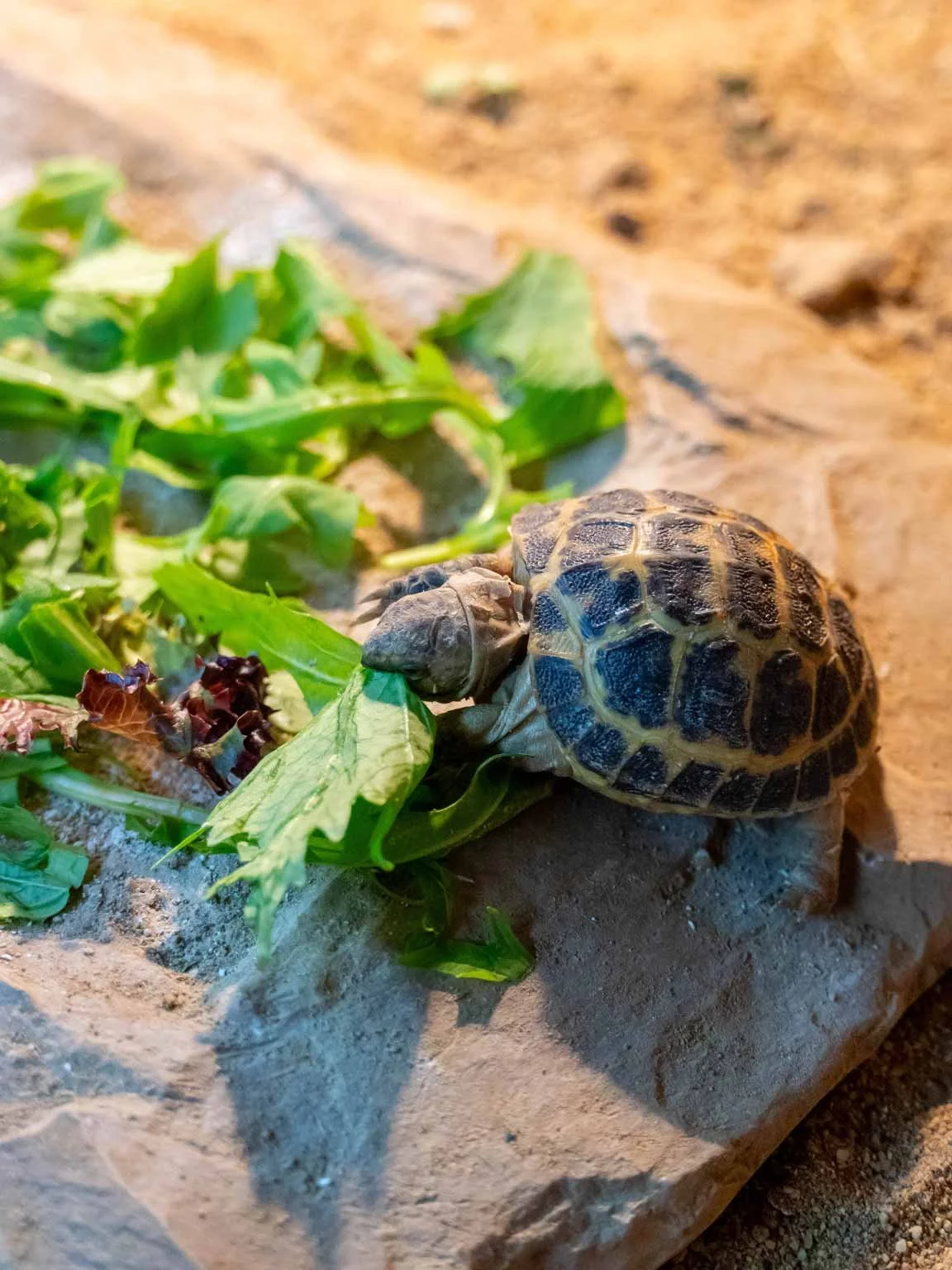 Image 3 of 3
Our animal sales policy
The welfare of our animals always comes first and we reserve the right to refuse a sale of any animal if we cannot be certain it is going to a home where it’s care requirements will be met.
–Buying your setup from us?
No problem – we'll make sure you have everything you need to get started.
–Already have your own setup?
We'll need to see photo proof that it's suitable and correctly prepared (temperatures, equipment) before we sell any animal.
This is to ensure every animal goes to a safe, suitable home where its needs can be properly met.
Our care guide
Overview
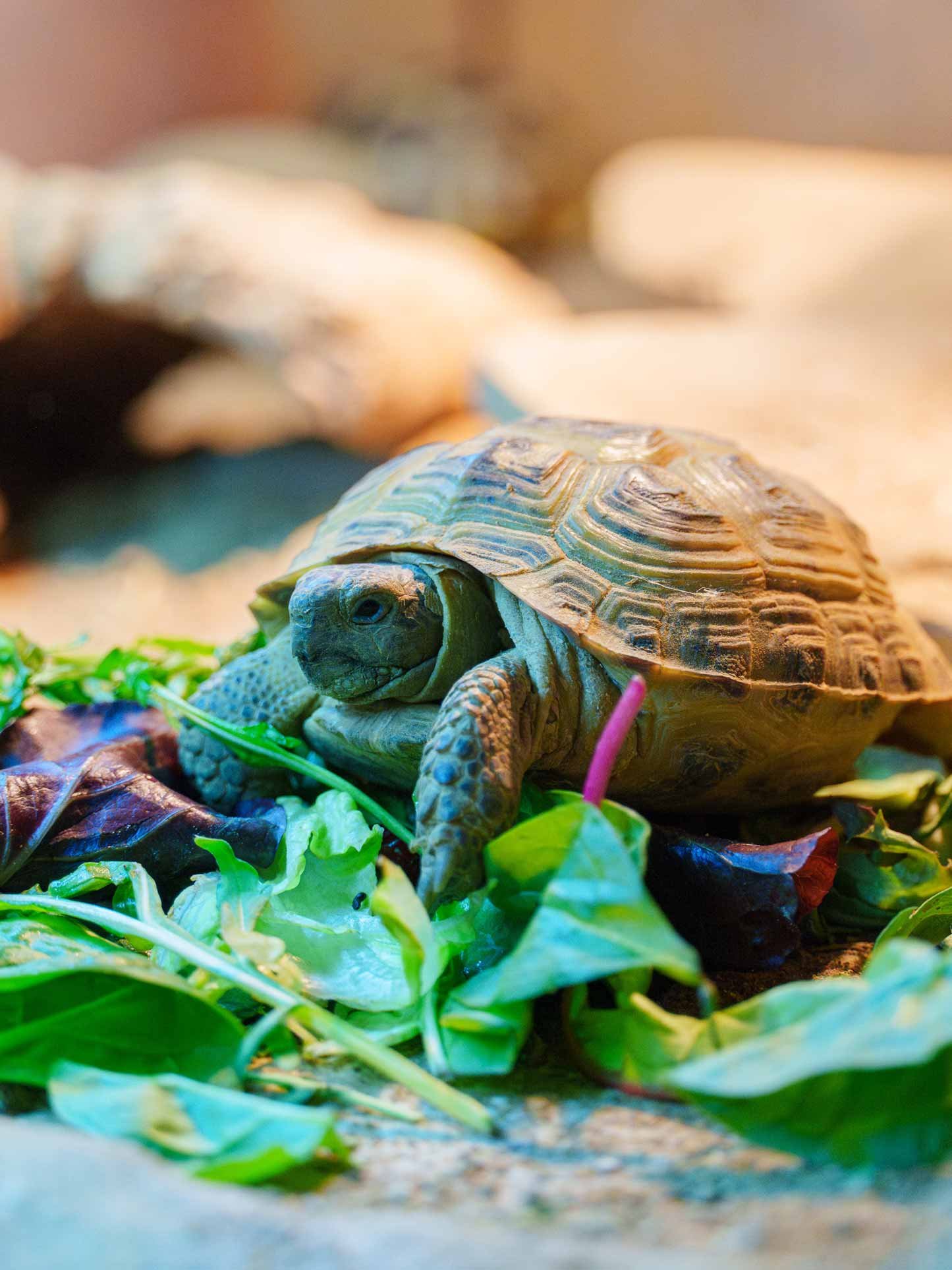
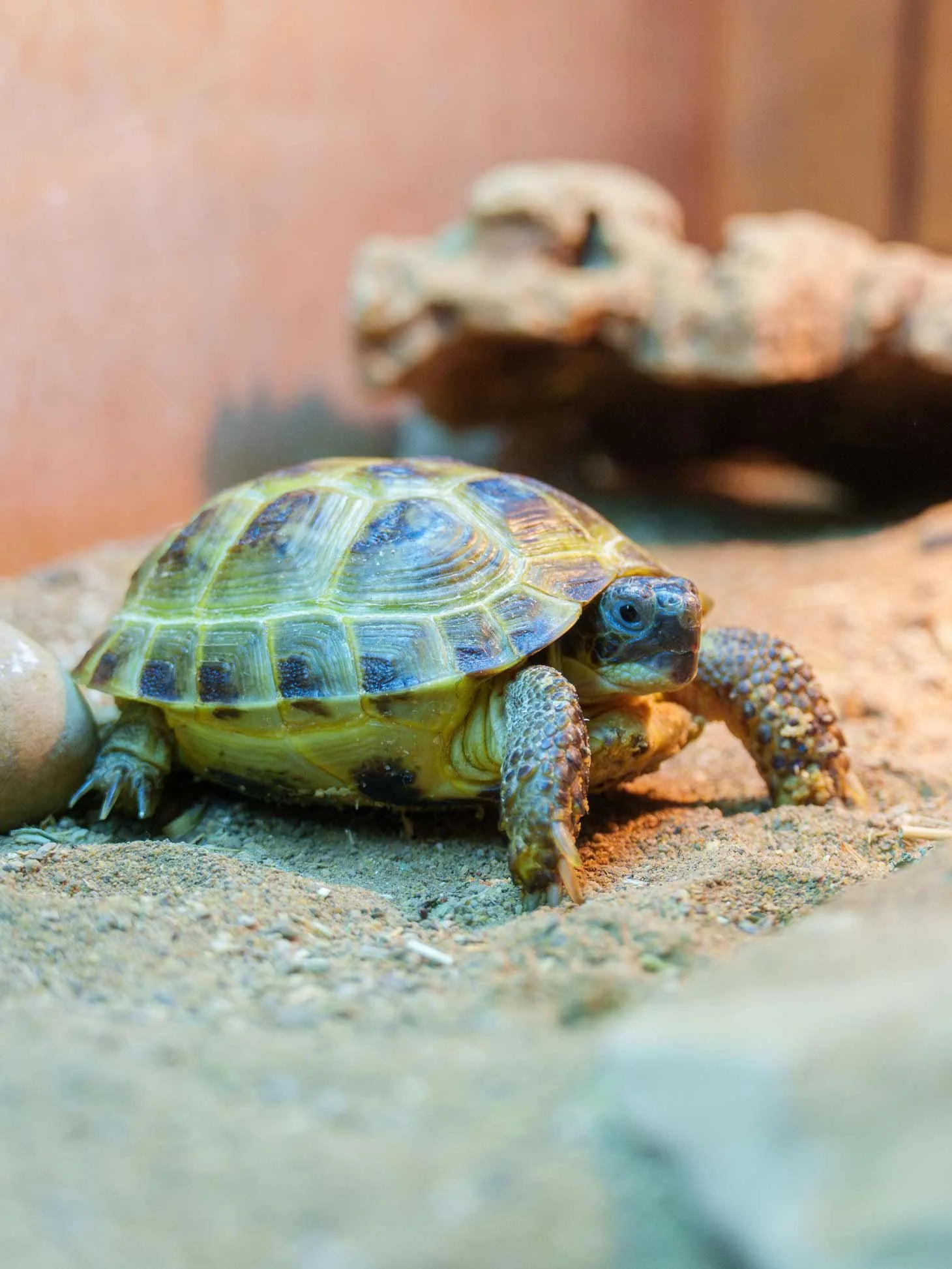
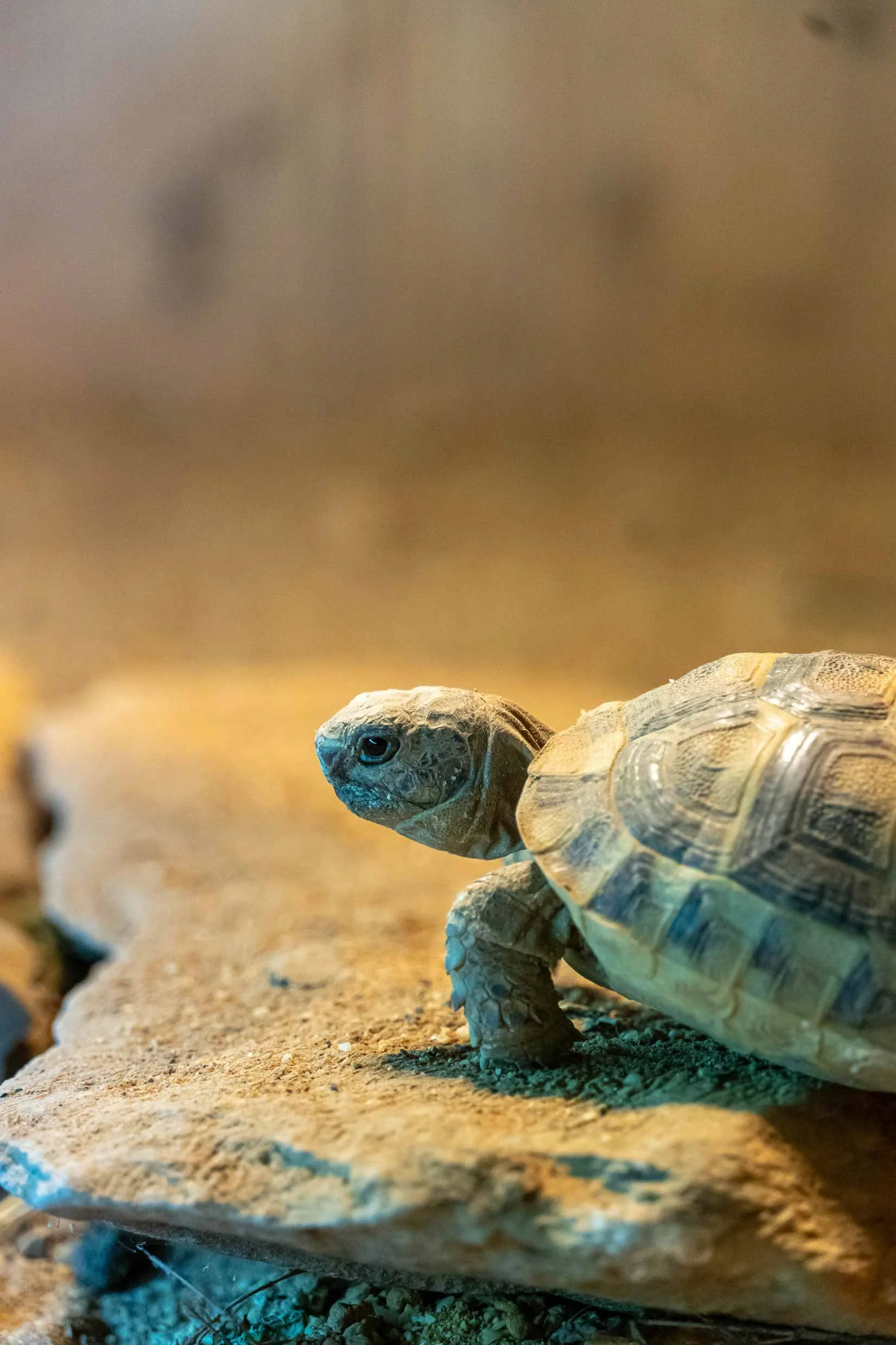
Mediterranean tortoises are native to arid regions in Mediterranean Europe, Africa, and parts of the Middle East. These species are primarily herbivorous and they practice brumation (or hibernation) in the wild and captivity.
Equipment
Tortoise table
Clamp lamp shade
Heat bulb
UVB bulb (High strength)
Dimming thermostat
Digital thermometer
UV starter controller
Tortoise life substrate
Housing
Mediterranean desert tortoises should be kept in a tortoise table, this is to ensure there is lots of airflow around them. They do not do well in a closed environment like a vivarium.
Ideally the tortoise table should be at least 4ft long, to achieve a distinct hot/cold gradient.
A piece of slate under the heat bulb is ideal for them to bask on.
Temperatures
Important to have a 12 hour day and night cycle. We do 8am-8pm, if you change from this adjust gradually overtime so the animal can adapt.
Day temperature: Hottest area is basking area at 34-36°C (94-96°F). Thermostat probe and thermometer measures here.
Night Temperature: Drop to room temperature. This is fine even in winter and is crucial to allow them to digest food properly.
UVB light
All daytime animals require UVB lighting. This plays the role of natural sunlight, allowing calcium and vitamin d3 to be absorbed. UVB light will be on for 12 hours a day as well.
Needs to be around 10-12% or Zone 3-4.
You should replace the bulb (depending on brand ) normally every 9-12 months. After this time it will not give the correct UV, despite looking like it is working normally.
The bulb should cover the full length of the table, and be placed halfway down the back wall of table to achieve maximum amount of exposure to tortoise.
Substrate and decoration
Although these tortoises originate from a dry desert area, we do not recommend to use sand, as if they were to eat it the sand can become compacted and cause obstructions in their stomach.
So the substrate of choice is a soil mix, as this is fully digestible if they were to eat it, as well as being more natural to their original environment.
This would be Tortoise-Life, and Edible Tortoise—Life.
For decoration slate, rocks, and wood are good for tortoises to climb on, as well as to practice building their muscles for if they were to topple over.
Water
A very shallow water bowl in the cold end of the table is suitable, this allows them to get in and out easily.
We also offer a bath a couple of times a week, this can be done in a small tub, with warm water.
Food and diet
Weeds such as dandelions, four leaf clover, and sticky weed are their main diet, you can try to pick these from the wild. There are many other types of weed too that are edible.
If you purchase greens from a supermarket then look for watercress, rocket, babyleaf salad, romain lettuce, little gem lettuce.
DO NOT FEED: Iceberg lettuce, fruit, spinach, vegetables.
Supplements
All tortoises in captivity need extra calcium and vitamins, as a powder supplement, dusted on greens.
5 days a week: Pure calcium supplement - Calcidust
Twice a week: Vitamin supplement - Nutrabol
Cleaning
Spot clean: Daily. Take out any uneaten live food and animal waste.
Full clean: Every 4 weeks take out all substrate and clean table with a reptile safe disinfectant.
Handling
Leave alone for a week to settle into new environment, its a big change for them!
Once settled and they are eating and acting normally, you can begin to get them used to your hands going into the enclosure.
They do enjoy having a roam around the house, or if its a hot day in the garden.
As with any animal ensure you wash your hands properly after handling.
Life span and size
Most tortoises in a well kept environment should live around 80-100 years.
During this time your tortoise will be fully grown at around 20 years. This size can be up to 20cm depending on the species.
Need Help Getting Started?
At The World Of Fish And Pets, we're always happy to help you prepare for your new pets.
Whether you need advice on choosing the right equipment, setting up an enclosure, or understanding your animals care requirements, we are here to help.
Come and visit us in Sheldon Birmingham, or get in touch.
Contact us:
Telephone: 0121 603 4325
Email: enquiries@theworldoffishandpets.co.uk
Facebook/Insta: @The World Of Fish And Pets