
 Image 1 of 1
Our animal sales policy
The welfare of our animals always comes first and we reserve the right to refuse a sale of any animal if we cannot be certain it is going to a home where it’s care requirements will be met.
–Buying your setup from us?
No problem – we'll make sure you have everything you need to get started.
–Already have your own setup?
We'll need to see photo proof that it's suitable and correctly prepared (temperatures, equipment) before we sell any animal.
This is to ensure every animal goes to a safe, suitable home where its needs can be properly met.
Our care guide
Overview
Scientific name: Chelonoidis carbonarius
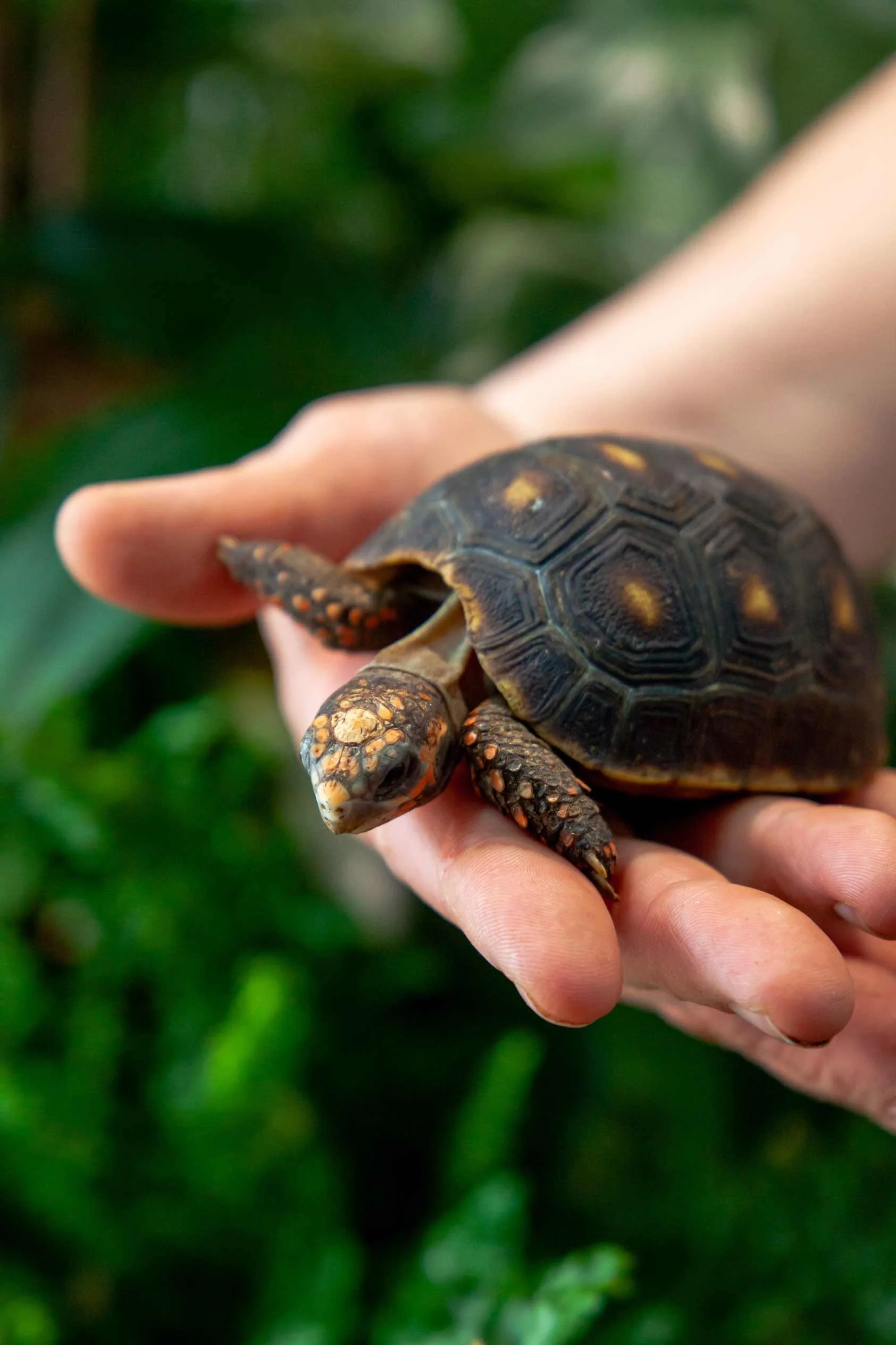
The Red-footed Tortoise originates from Central and Northern South America, as well as the Caribbean islands.
They inhabit a range of different environments, primarily humid and wet forests. This species of tortoise is very popular due to its unique appearance, with brightly coloured markings on its head, legs and shell.
Equipment
Vivarium (minimum 4ft)
Ceramic heat lamp fitting
Heat bulb
UVB bulb (high strength)
Dimming thermostat
Digital thermometer
UV starter controller
BioForest Life substrate
Housing
Red-footed tortoises should be kept in a vivarium to ensure the correct humidity levels are maintained within their environment. This is achieved through the substrate and by spraying the enclosure daily with water.
Ideally, the vivarium should be at least 4ft long to allow for a distinct hot and cold temperature gradient.
A piece of slate placed beneath the heat bulb provides an ideal basking area.
Temperatures
It is important to maintain a consistent 12-hour day and night cycle. We use an 8am–8pm schedule. If changing the lighting schedule, make adjustments gradually to allow the animal to adapt.
Day temperature: The hottest area should be the basking spot, at 30–32°C (86–89°F). Use the thermostat probe and thermometer to monitor this.
Night temperature: Allow temperatures to drop to room temperature.
This is suitable even during winter and is important for allowing the tortoise to digest food properly.
UVB lighting
UVB lighting is essential for daytime-active reptiles. It replicates an important part of natural sunlight, allowing calcium and vitamin D3 to be properly utilised by the body.
UVB lighting should be provided for 12 hours each day.
The UVB output should be around 8–10% or Zone 3.
Bulbs should generally be replaced every 9–12 months, depending on the brand. After this time, UV output can decline even if the bulb still appears to be working normally.
The bulb should cover the full length of the table and be positioned halfway down the back wall of the vivarium to maximise the tortoise's exposure.
Substrate & decoration
As red-footed tortoises originate from rainforest environments, a forest-style substrate is ideal.
Our substrate of choice is Bio Life Forest. Bark chips and moss can also be added to help retain humidity within the enclosure.
Slate, rocks and wood make suitable decorations, providing opportunities for climbing and helping tortoises develop their muscles and practise righting themselves if they become overturned.
Edible plants can also be introduced, but always check that they are safe for tortoises before adding them.
Water
A very shallow water bowl positioned at the cooler end of the vivarium is suitable. Ensure the tortoise can easily get in and out of the bowl.
We also recommend bathing a couple of times a week. This can be done in a small tub containing warm, shallow water.
Food & diet
Suitable foods include weeds such as dandelions, four-leaf clover and sticky weed, many of which can be collected from the wild. There are also plenty of other edible weeds to explore.
If purchasing greens from a supermarket, suitable options include watercress, rocket, baby leaf salad, romaine lettuce and Little Gem lettuce.
This species also eats fruit, raw meats, eggs, insects, worms and specialist reptile fruit powder food.
Do not feed: Iceberg lettuce or spinach.
Supplements
Captive tortoises require additional calcium and vitamins through powdered supplements, which can be dusted over their greens.
5 days a week: Pure calcium supplement – Calcidust.
Twice a week: Vitamin supplement – Nutrabol.
Cleaning
Spot cleaning: Daily. Remove any uneaten live food and animal waste.
Full cleaning: Every 4 weeks, remove all substrate and clean the vivarium using a reptile-safe disinfectant.
Handling
Allow your tortoise to settle into its new environment for at least a week. Moving to a new home can be a significant change for them.
Once settled and eating and behaving normally, you can gradually introduce your hands into the enclosure to help them become accustomed to your presence.
They may also enjoy exploring in a safe area of the house or spending time outdoors on a warm day, with appropriate supervision and protection.
As with any animal, always wash your hands thoroughly after handling.
Life span & size
With appropriate care, red-footed tortoises can have a lifespan of approximately 50–90 years.
They reach full adult size at around 20 years of age and can grow up to approximately 35cm in length.
Need Help Getting Started?
At The World Of Fish And Pets, we're always happy to help you prepare for your new pets.
Whether you need advice on choosing the right equipment, setting up an enclosure, or understanding your animals care requirements, we are here to help.
Come and visit us in Sheldon Birmingham, or get in touch.
Contact us:
Telephone: 0121 603 4325
Email: enquiries@theworldoffishandpets.co.uk
Facebook/Insta: @The World Of Fish And Pets