
 Image 1 of 3
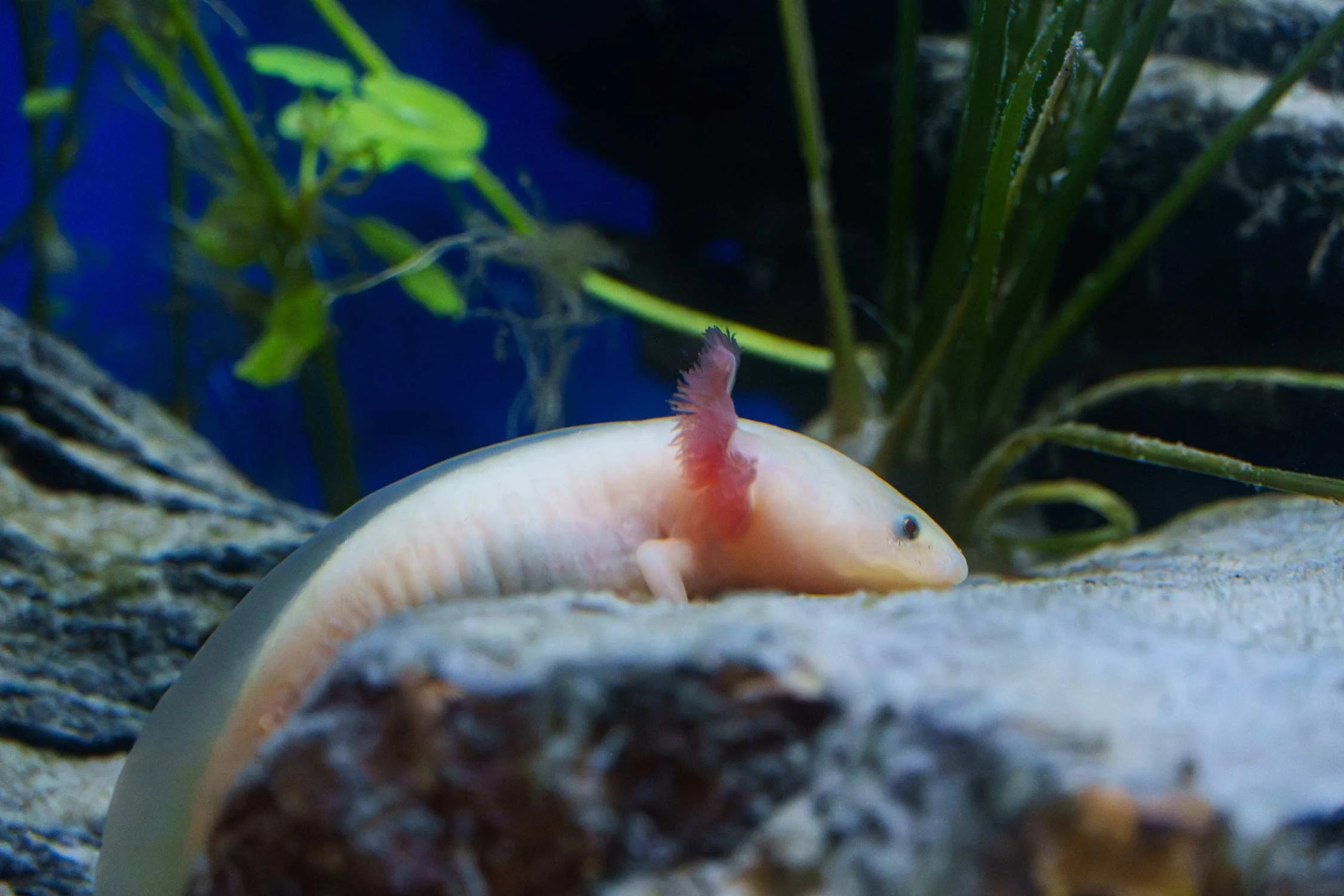 Image 2 of 3
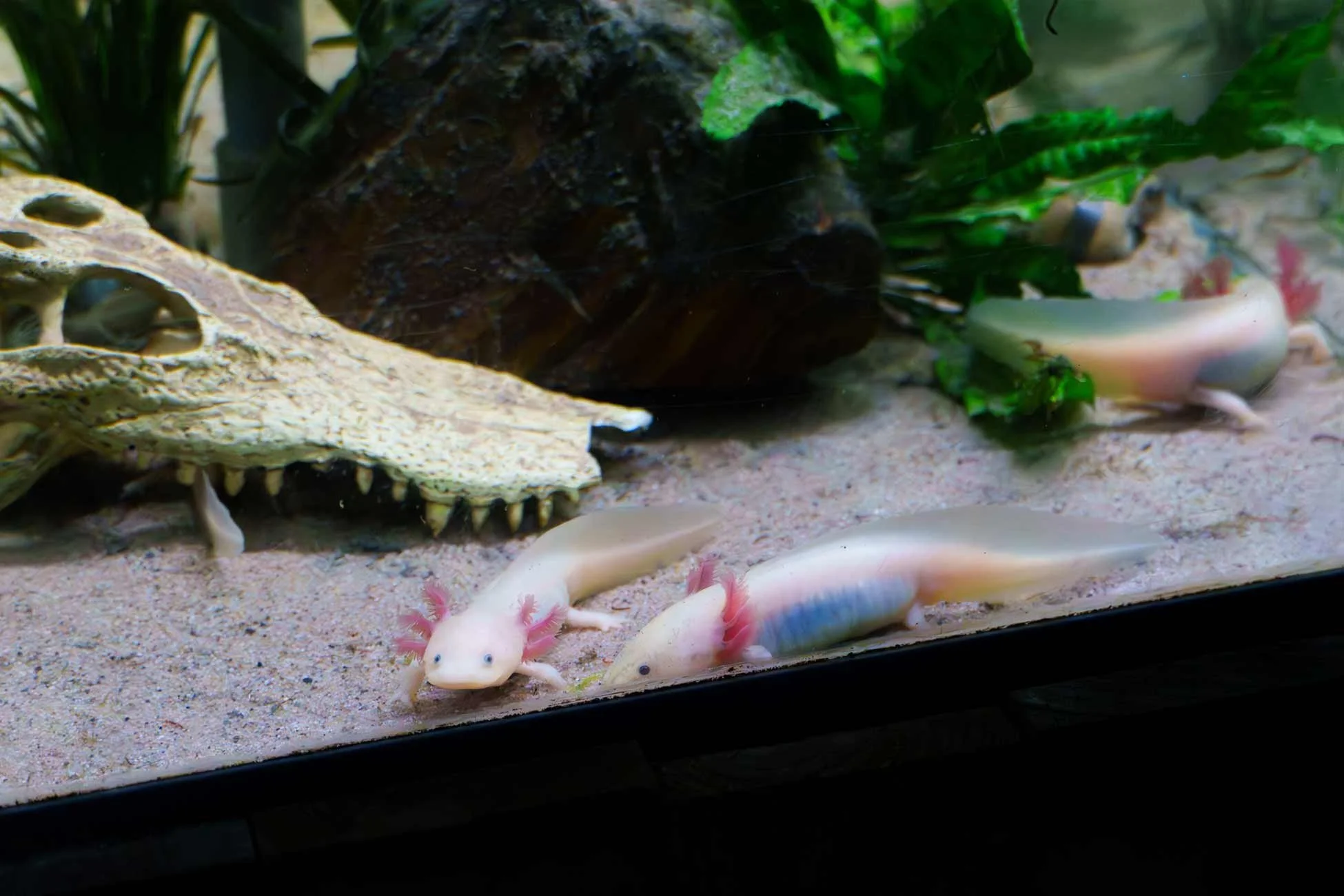 Image 3 of 3
Our care guide
Overview
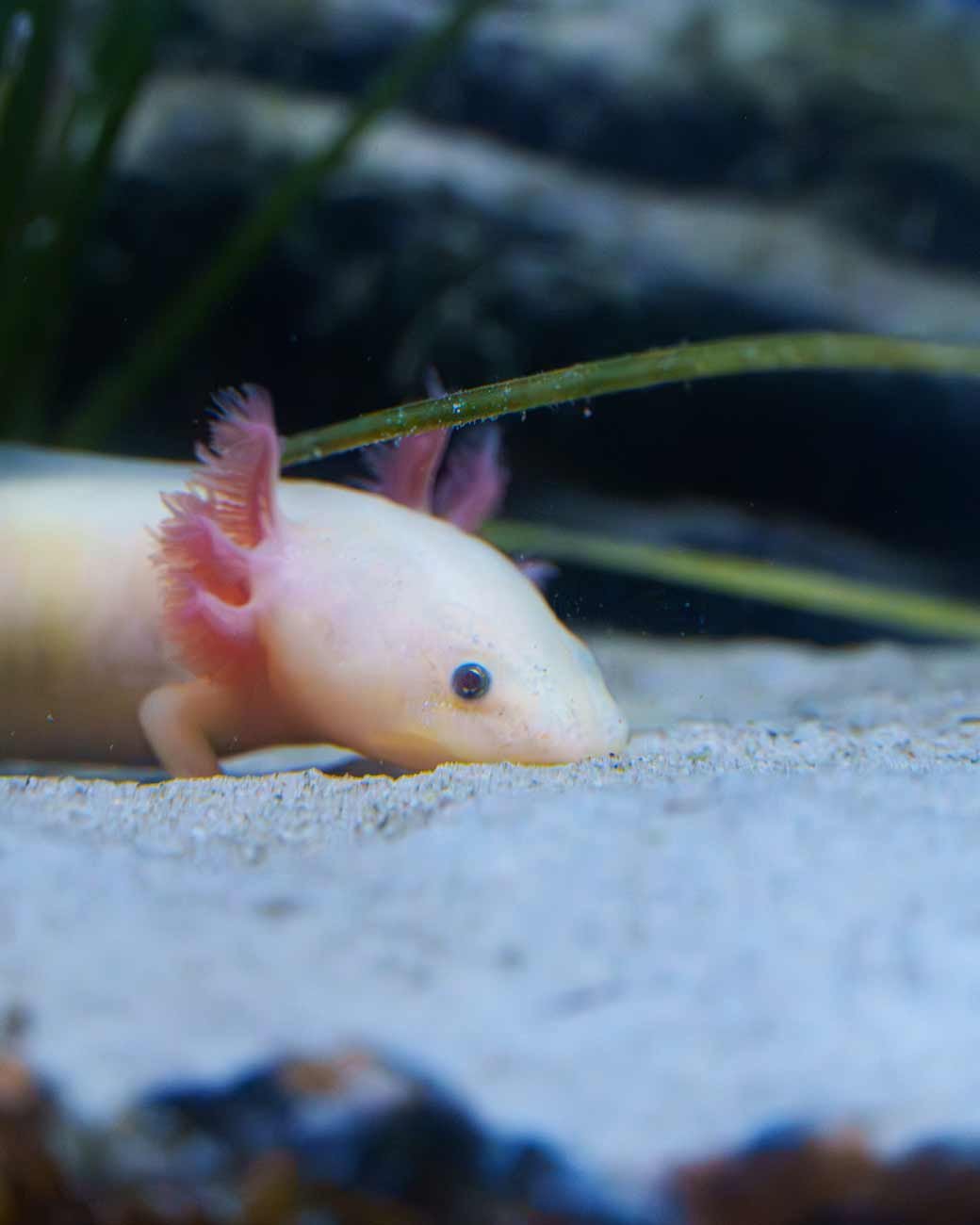
Axolotls are amphibians that spend their whole lives underwater. They exist in the wild in only one place - the lake complex of Xochimilco, a network of artificial channels, small lakes, and temporary wetlands that help supply water to nearby Mexico City. Axolotls have long fascinated scientists for their ability to regenerate lost body parts and for their rare trait of neoteny, which means they retain larval features throughout life.
Equipment
75 litre tank or larger (depends on age/how many together)
Filter
LED light
Feeding tongs
Aquatic fine sand
Live plants
Rocks (caves)
Natural wood
Tank requriments
The minimum recommended size for baby axolotls or a singular axolotl is 75 litres, however once grown or keeping multiple a larger tank is always recommended.
A slow running filter is ideal with no air bubbles, as axolotls cannot have any air bubbles in the water.
Temperatures
Axolotls like a cold water temperature and will not do well in warm water.
During the summer months we recommend to keep an eye on the temperature of the water using a thermometer. The temperature should not exceed 22c.
If it does you need a way of cooling the water. This can be through a fan, chiller, or placing frozen water bottles on top of the water floating. This is a great way of lowering the temp slowly and can replace once melted.
Setting up a tank
To get a tank ready for an axolotl it is recommended to set up at least 24 hours before adding the axolotl. (Same day if using live bacteria in double quantity)
Add cold water and get filter running.
Next you should add AxoSafe, this is a water dechlorinator made safe for axolotls.
This will neutralise any of the harmful chemicals in our tap water so it is safe for them. Then you should add all decorations and plants to the tank.
Next add the live bacteria in the recommended amount (depending how far in advance setting up). If testing water make sure to test for ammonia and nitrate, these are most important.
Substrate and decoration
If old enough, a fine aquatic sand is the preferred substrate. Gravel should not be used as it is dangerous if eaten. Sand will help to stabilise the PH levels of the water, and be a medium for the bacteria to live on.
Sand should be around an inch thick for room to plant live plants.
As axolotls like to hide in dark crevices, rocks, caves and woods are ideal for decoration and to fill out the tank.
Live aquatic plants help with oxygen levels, as well as lowering nitrates/phosphates, and present a more natural environment for the axolotl.
Maintenance & Water changes
Use a small net every day to pull out any waste particles in water or sand.
We recommend a water change of 1/4 every 2 weeks.
Remembering to wash the filter sponge within the dirty tank water (never under tap, this will kill good bacteria!)
New water entering the tank needs to be treated with AxoSafe, and a small amount of live bacteria.
Food and diet
Baby axolotls: May not be ready for earthworms yet, so at this stage frozen bloodworms is best.
Add appropriate size of frozen food to tank once a day. If not eaten after a few hours remove the remaining food.
Juvenile/adult: Diet consists mainly of live earthworms. These are best hand fed via long tongs, as axolotls have poor eyesight.
Additionally there is pellet food, but not many axolotls will favour these. If using these be sure to remove any uneaten food as it will negatively effect the water chemistry.
Things to watch out for
Cloudy water: Usually means ammonia or nitrate is present in water. You can fix this by adding more live bacteria.
Axolotl not behaving normally/inactive: Test water, ammonia or nitrate could be present.
Axolotl gills not fluffy or tucked away: Can be a few things, most common is water temperature to check its not too warm. If okay then check as above for ammonia or nitrate.
Axolotl rolling or at surface of water: This normally means there is excess oxygen inside the axolotls body. Sometimes can be from food or air bubbles. Solution is to remove axolotl from tank, and place in a small tub with just enough safe treated water to cover axolotl. As you will not be able to have a filter in this, you need to do a 100% water changes twice a day until cured.
Need Help Getting Started?
At The World Of Fish And Pets, we're always happy to help you prepare for taking care of a new pet.
Whether you need advice on choosing the right equipment, setting up an enclosure, or understanding your animals care requirements, we are here to help.
Contact us:
Telephone: 0121 603 4325
Email: enquiries@theworldoffishandpets.co.uk
Facebook/Insta: @The World Of Fish And Pets