
The 5 easiest reptiles to keep
Five exotic pets that are surprisingly easy to keep
Thinking about getting a pet but fancy something a little different from the usual? Reptiles are now very popular, and we are sharing some of our best ones to keep that are easy and beginner friendly.
At The World Of Fish And Pets, we love helping people find the right pet for their home, whether you're completely new to reptile keeping or already have a few years of experience.
One of the biggest misconceptions about reptiles is that they're all difficult to look after. While every animal has its own requirements, some species are surprisingly straightforward to care for once you have the correct set up and equipment.
We've put together a list of five popular reptiles that are well worth considering if you're thinking about getting your first.
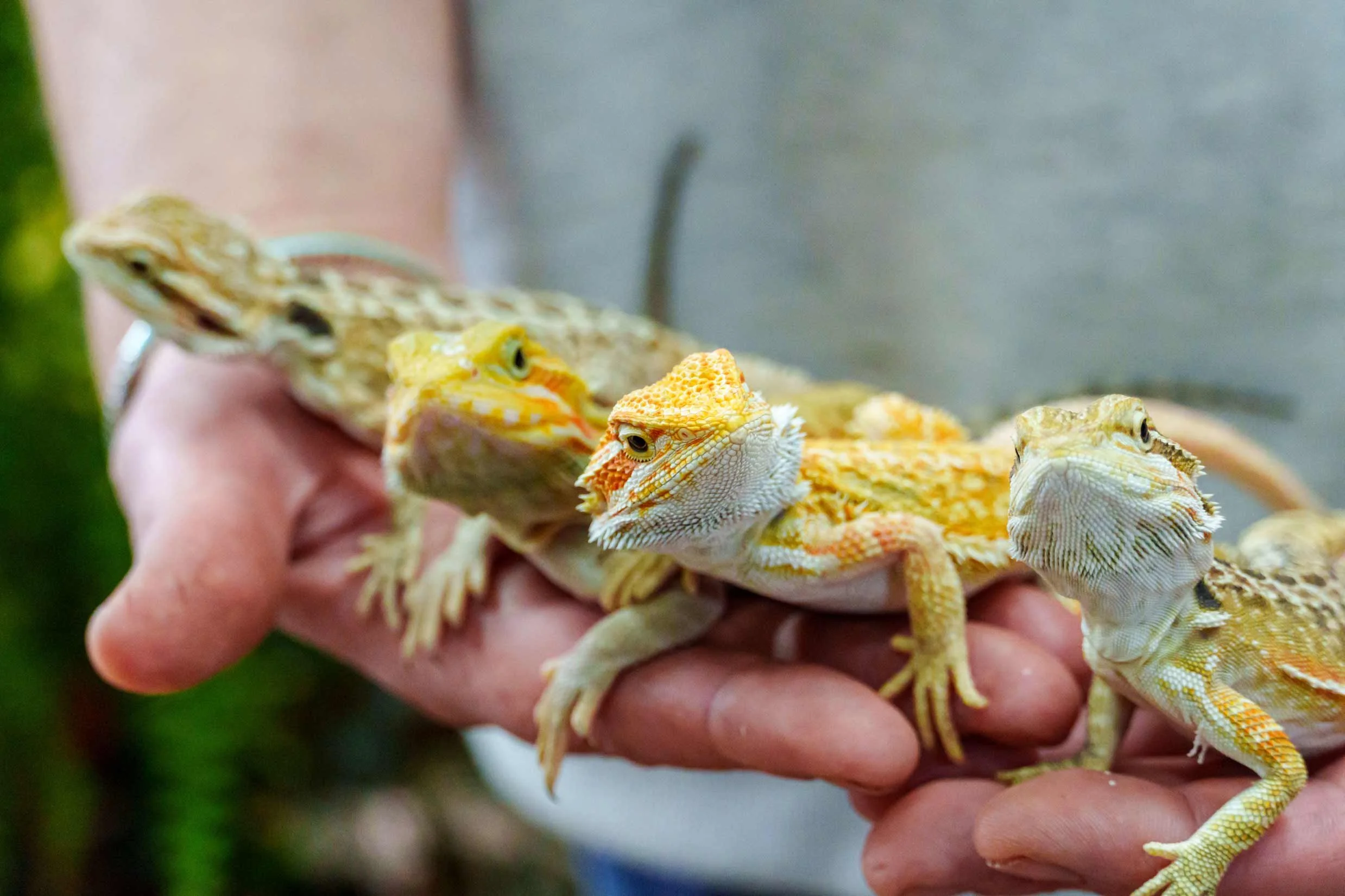
1. Bearded Dragons
One of the friendliest and most popular pet lizards
Bearded dragons are firm favourites here in the reptile world. They're curious, full of personality and often become very comfortable around their owners. Many enjoy coming out of their vivarium to explore and spend time with their keepers.
They're a diurnal species, meaning they're active during the day and sleep at night. A regular 12-hour lighting cycle works well, making them a great choice for families who want a reptile they can interact with during normal daytime hours.
For an adult bearded dragon, we'd recommend a spacious vivarium of at least 4ft in length, with plenty of room to move around. They need a hot basking area of around 40–43°C, ideally with a slate or rock underneath the heat lamp to help retain warmth.
A suitable high output UVB light is also essential for their health, helping them process calcium and maintain strong bones.
When it comes to feeding, bearded dragons are omnivores, enjoying a mixture of suitable leafy greens and live insects. Locusts and dubia roaches are popular nutritious choices, while silkworms and morio worms can also be included.
If you're looking for a reptile with plenty of personality, or that works well with young children, a bearded dragon could be a great choice.
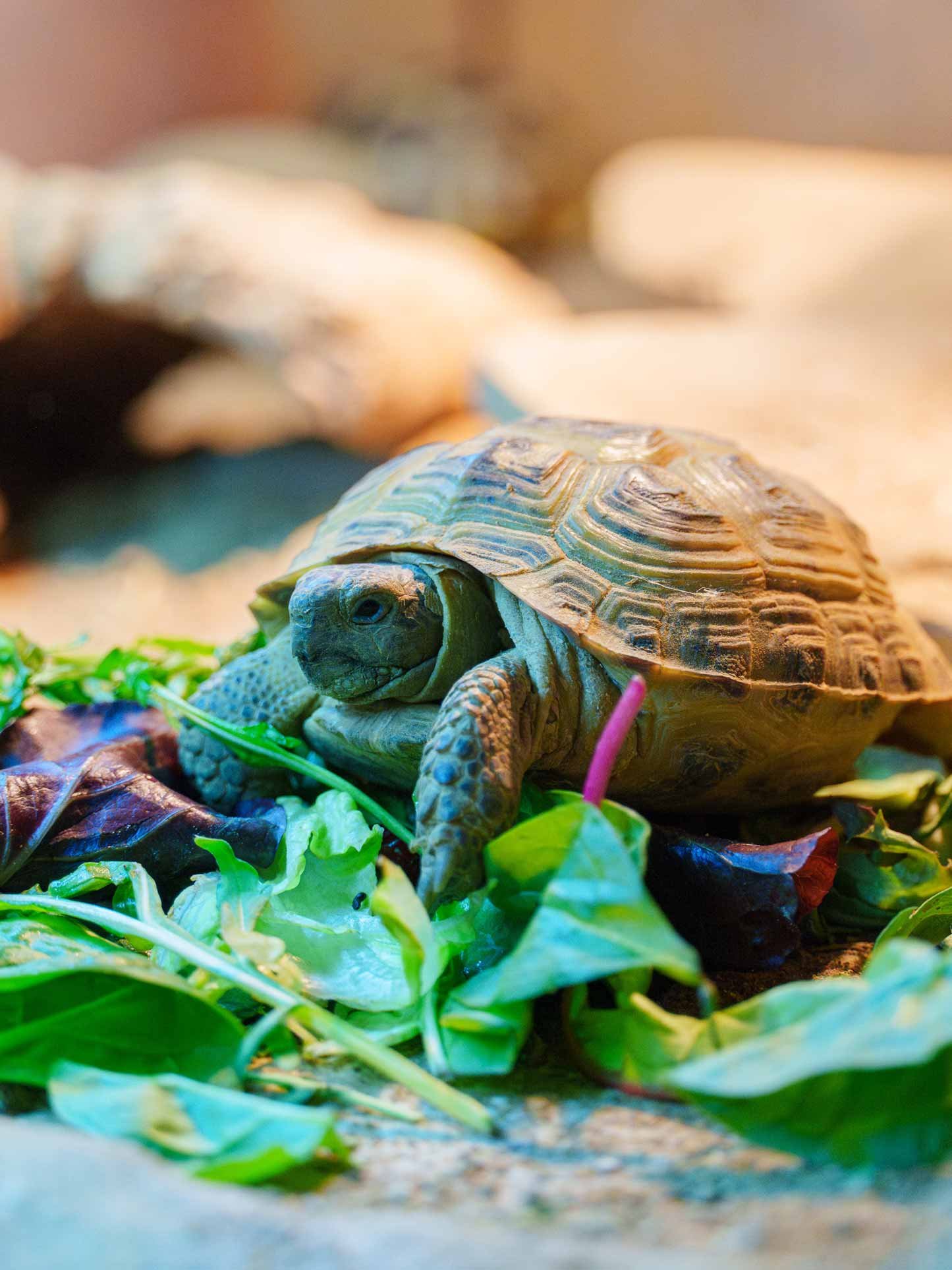
2. Horsefield Tortoises
Small tortoises with plenty of character
Horsefield tortoises, sometimes called Russian tortoises, are another popular choice. They don't grow particularly large compared with many other tortoise species, but they certainly make up for their size with personality.
They're naturally curious and love exploring their surroundings, particularly when there's plenty of space to wander and graze.
One of the most important things to get right with a Horsefield tortoise is its housing. Unlike some reptiles, they aren't suited to a traditional enclosed vivarium. They need a suitable tortoise table with good airflow.
A good soil based substrate, such as Tortoise Life, helps create a more natural environment. They'll also need a basking area reaching around 34–35°C, alongside appropriate UVB lighting.
Their diet should consist mainly of suitable weeds, flowers and leafy plants. Rocket, watercress and certain herbs can be offered alongside a good variety of safe edible weeds.
There is one important thing to consider before getting a tortoise: their lifespan. Horsefields can live for several decades, so owning one is a long term commitment. It's important to be prepared for that responsibility before bringing one home.
At The World Of Fish And Pets, we always encourage new tortoise owners to understand their care requirements before making a decision.
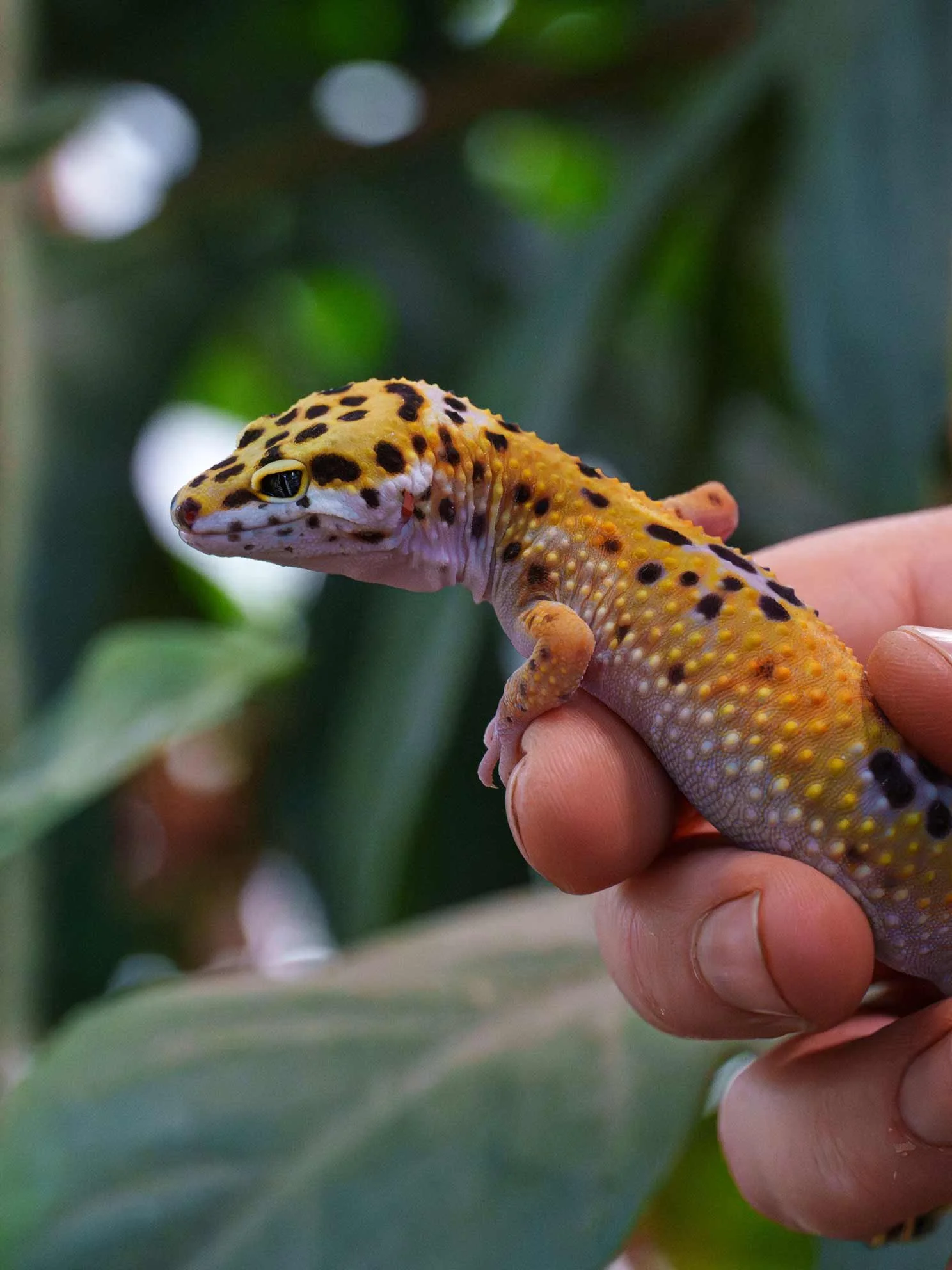
3. Leopard Geckos
A brilliant choice for first time reptile keepers
Leopard geckos have been a favourite for many reptile keepers. They're relatively small, generally calm once settled and don't require an enormous amount of space compared with larger reptiles.
They're particularly popular with people getting into reptile keeping for the first time, as their care requirements are fairly straightforward once their enclosure is set up correctly.
Leopard geckos are most active around dawn and dusk. During the day, you'll often find them tucked away in one of their hides, coming out to explore when things become quieter.
Their enclosure needs a warm area and a cooler area so they can regulate their body temperature. A warm hide should reach around 31–33°C, with heating controlled by a suitable thermostat.
Leopard geckos eat live insects, including crickets, locusts and other suitable feeder insects, alongside some supplements.
Another reason people love leopard geckos is the huge variety of colours and patterns available. There are so many different morphs to choose from, ranging from the traditional spotted appearance to some really unusual patterns and colours.
They typically grow to around 8–10 inches and can live for 15–20 years or longer with the right care.
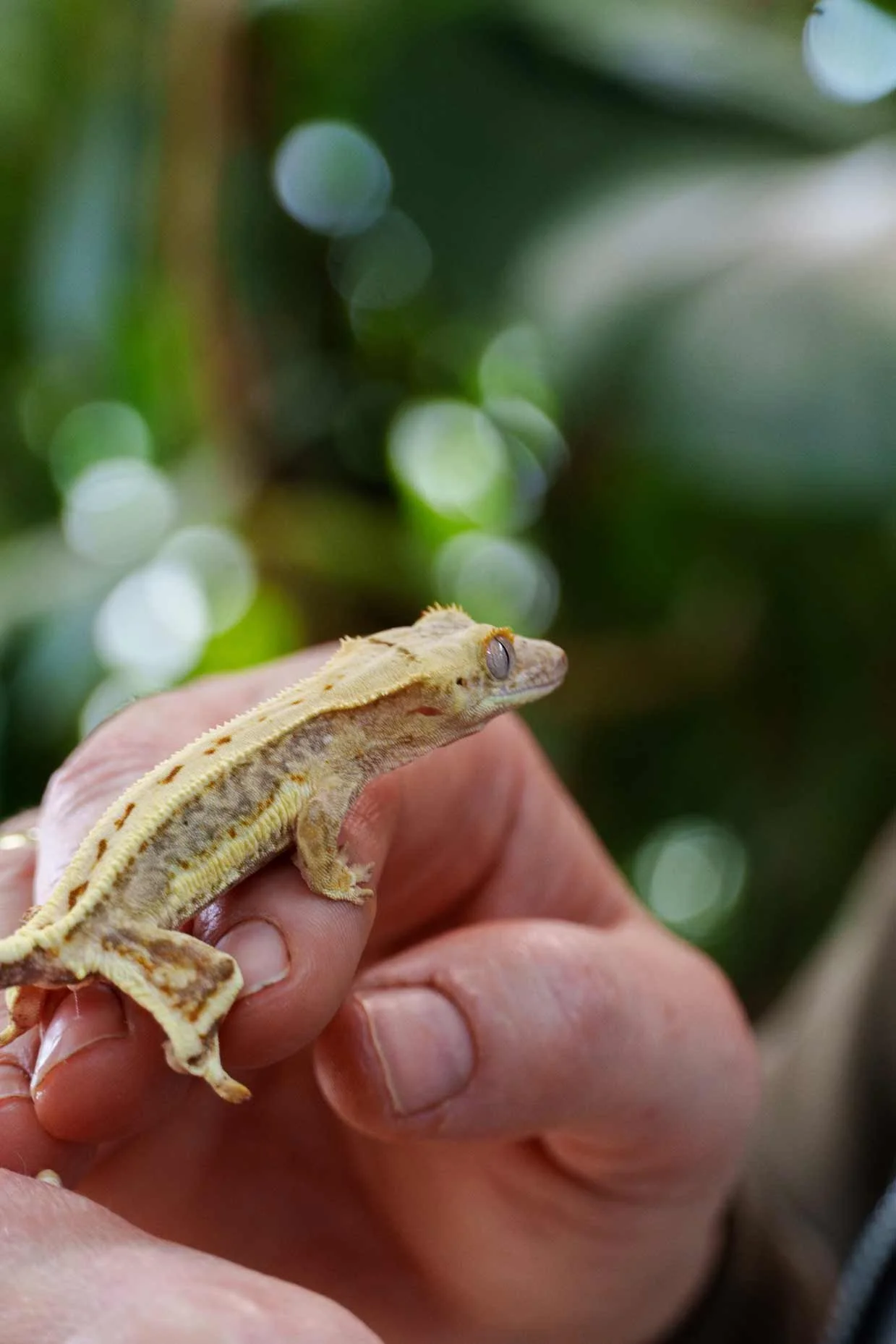
4. Crested Geckos
A beautiful gecko that doesn't rely on live food alone in their diet
Crested geckos are a really interesting little reptile and a fantastic option for anyone looking for something a bit different.
Originating from New Caledonia, they're an arboreal species, which means they spend most of their time climbing rather than living on the ground.
One of the biggest advantages of keeping a crested gecko is their diet. Unlike leopard geckos, they don't rely entirely on live insects. They can be fed a specially formulated powdered diet mixed with water, with different fruit based flavours available. Suitable live insects, such as crickets, can also be offered.
As they come from a humid rainforest environment, their enclosure needs to reflect this. A tall glass terrarium with plenty of branches, climbing areas and plants is ideal.
Temperatures should generally be kept around 22–26°C, taking care not to let the enclosure become too hot. Regular misting helps maintain suitable humidity and gives the gecko moisture to drink from leaves and other surfaces.
Crested geckos also look fantastic in natural planted set ups. Using real plants and climbing features can create a beautiful little rainforest environment. Bioactive enclosures are another popular option, using springtails and suitable woodlice to help break down waste.
They usually reach around 8–10 inches in total length and are a lovely choice for anyone interested in creating a natural looking reptile enclosure.
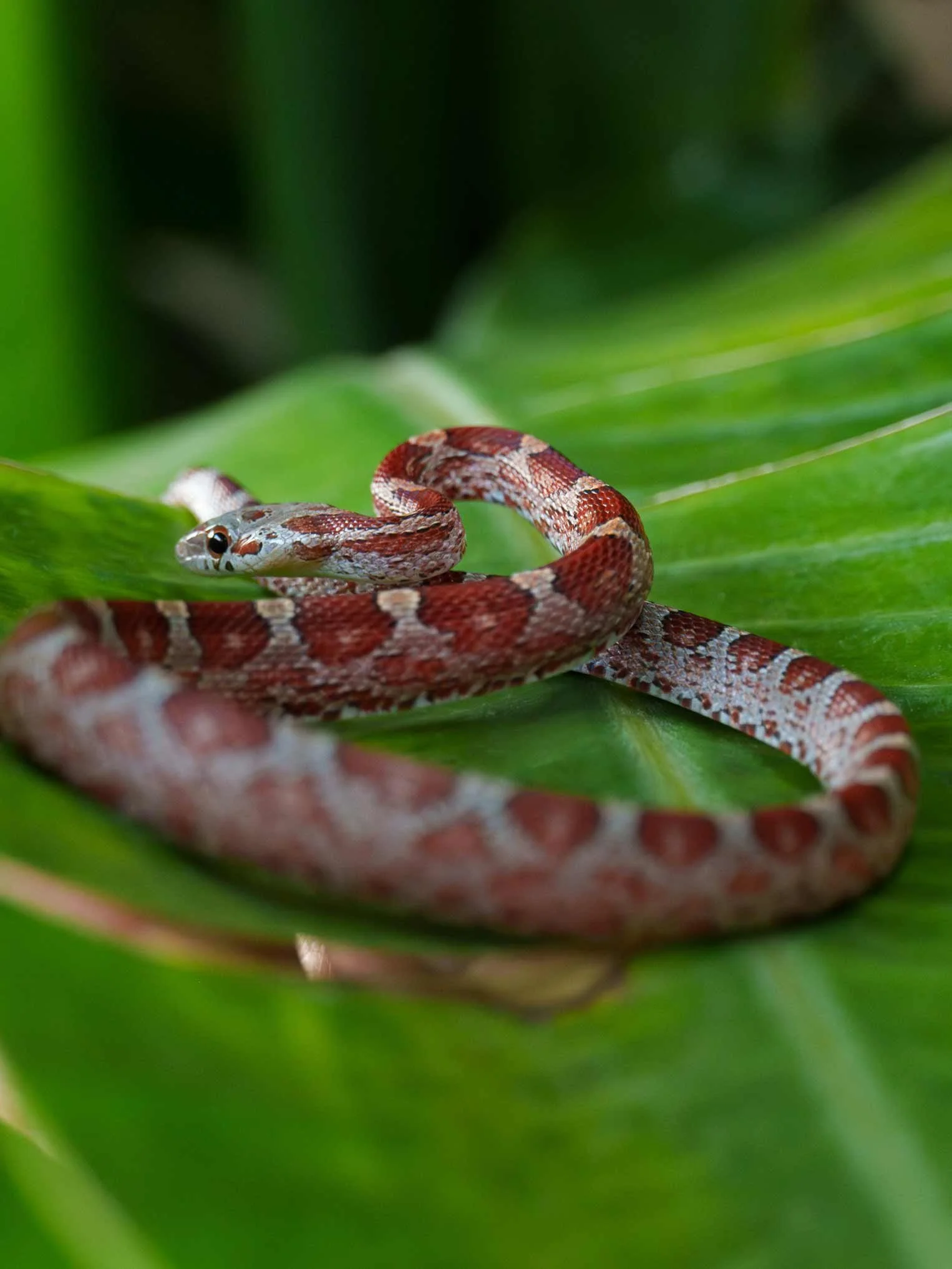
5. Corn Snakes
A fantastic first snake with hundreds of colour variations
If you've ever thought about keeping a snake, corn snakes are a great species to start researching.
They're one of the most commonly kept pet snakes thanks to their generally calm temperament, manageable size and straightforward feeding routine. They're also available in hundreds of different colour and pattern variations (morphs), so there's plenty of choice.
Young corn snakes need a suitably sized, secure enclosure with plenty of hiding places. As they grow, their housing will need to be upgraded to give them enough room to move around and explore. An adult enclosure of around 4ft is a common starting point, depending on the individual snake.
Their environment needs a suitable temperature gradient, with a warm area of around 28–30°C and a cooler area at the opposite end. All heating should be controlled using an appropriate thermostat.
Corn snakes are carnivores and are usually fed appropriately sized frozen thawed mice. Feeding frequency will depend on their age, size and body condition, with younger snakes generally needing more frequent meals.
Most corn snakes grow to around 4–5ft long, although some can become larger. With good care, they can live for 15–20 years or more, so they're certainly a pet to consider carefully before committing.
Finding the right exotic pet for your home
As you can see, there's plenty of choice when it comes to keeping exotic pets and reptiles. Whether you like the friendly personality of a bearded dragon, the interesting behaviour of a tortoise or the beauty of a crested gecko, there's something for almost every type of reptile enthusiast, and this is just a few!
The most important thing is choosing an animal that suits your lifestyle and making sure you can provide everything it needs. Heating, lighting, enclosure size and diet all play an important part in keeping reptiles healthy.
If you're not sure which reptile would be right for you, we're always happy to help point you in the right direction.
Whether you're looking for your first reptile, adding to an existing collection or simply want to learn more about reptile keeping, take a look around our website.
You can browse our current available animals, explore our reptile pages and find out more about the pets that interest you.
Visit us or get in touch
If you're interested in buying a reptile, checking current availability or finding out more about our setups and equipment, we'd love to hear from you.
Call us on 0121 6034325 or visit us in person.
We're open six days a week, Tuesday to Sunday, in Sheldon, Birmingham.